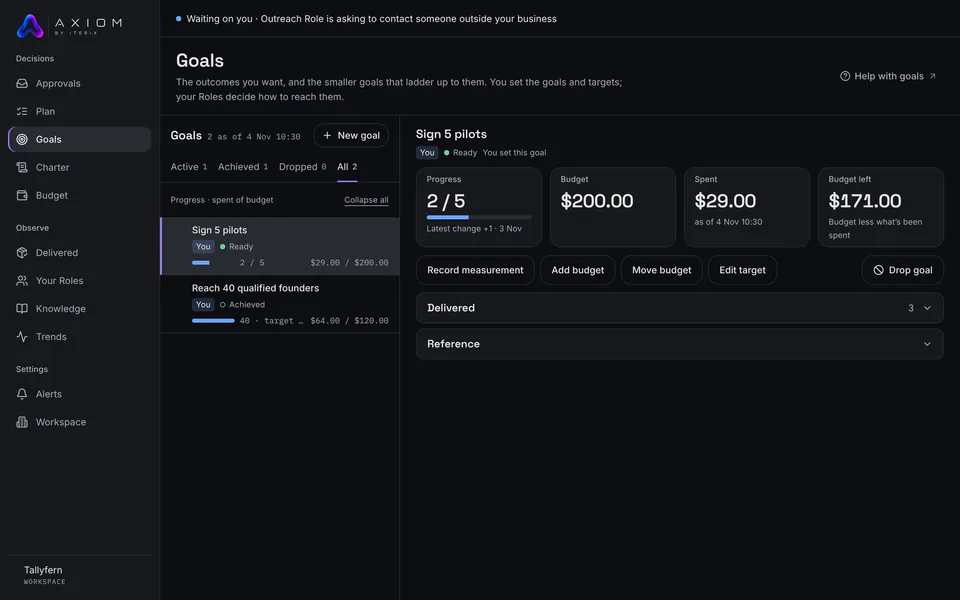
Here's Axiom in the order it happens: from the goal you set to the next decision that needs you.
Real Axiom screens, shown with a sample business.
01
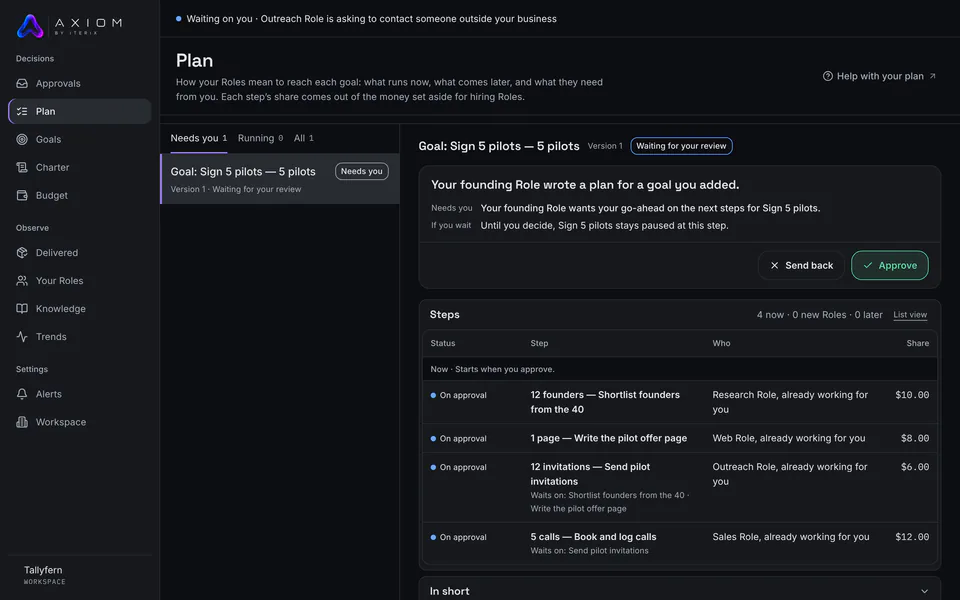
Set a goal. Let the plan take shape.
Name a measurable goal, its target and its budget. Your founding Role writes the plan: the steps, and the Roles to staff them. It writes and revises every version; you don't edit the plan yourself. You approve it, send it back with a reason, or answer what it asks.
Planning is paid for too, and it starts before you approve the first plan.
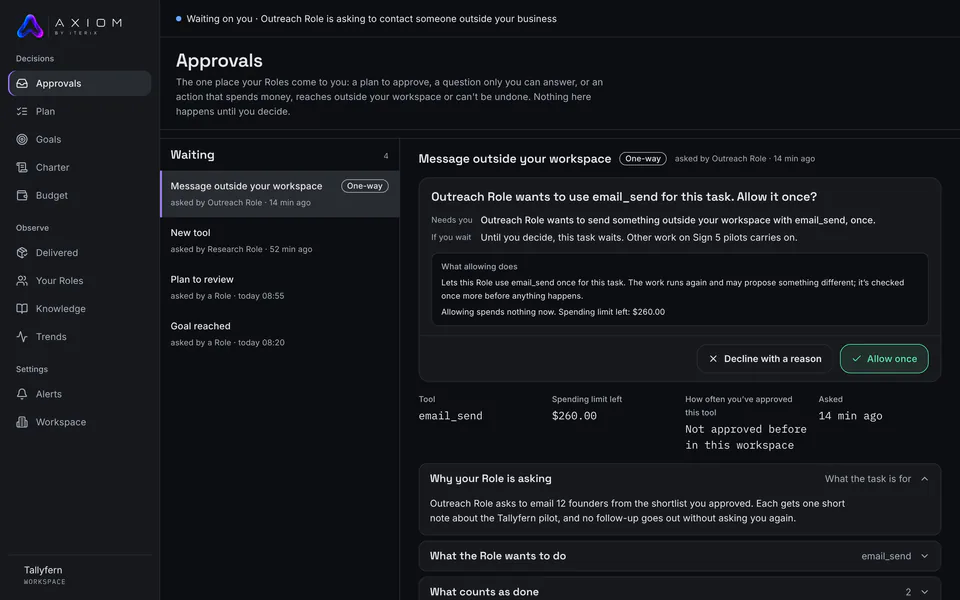
A plan that hires a Role, adds a tool or asks for more money comes to you to approve. So does any action that can't be undone, and any tool a Role hasn't been given: the Role stops and the request waits in Approvals. Some actions, like publishing outside your workspace, always wait for a person.
Not everything waits. A plan version that hires no one, adds no tools, moves no money and changes no checks starts on its own. A Role you approved in a plan's outline can start inside the amount you approved, without asking again.
Anything outside a Role's reach is refused outright, not asked.
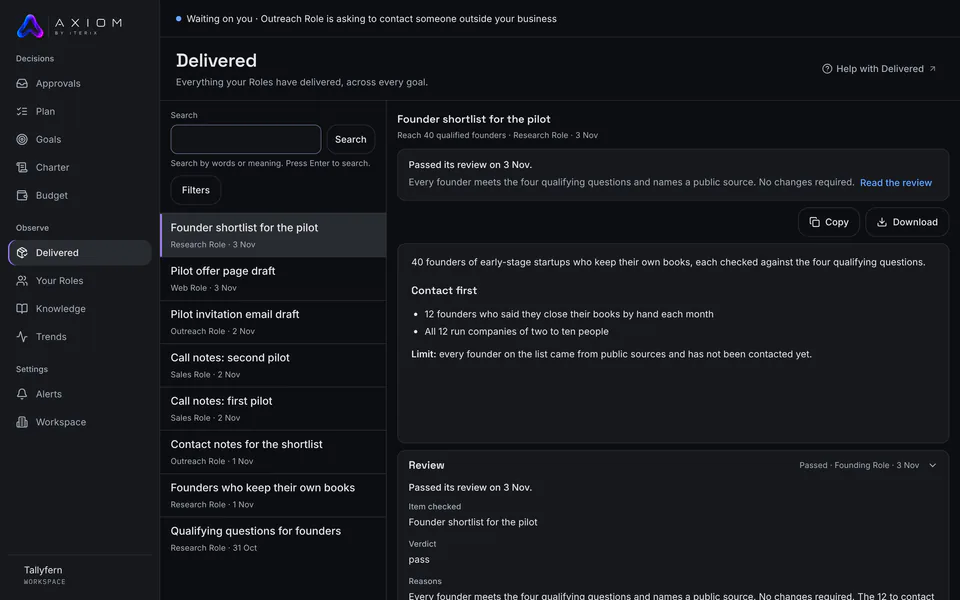
Nothing a Role hands in counts until a separate checker has passed it.
Delivered gathers the work that passed. Open a piece to read it, with the goal it served, the Role that made it, when it was delivered, its version and what the work cost.
A pass isn't a guarantee. Review the work before you use it.
The cost shown is for the task that produced the work, not the planning around it, and it's marked est. when it's an estimate.
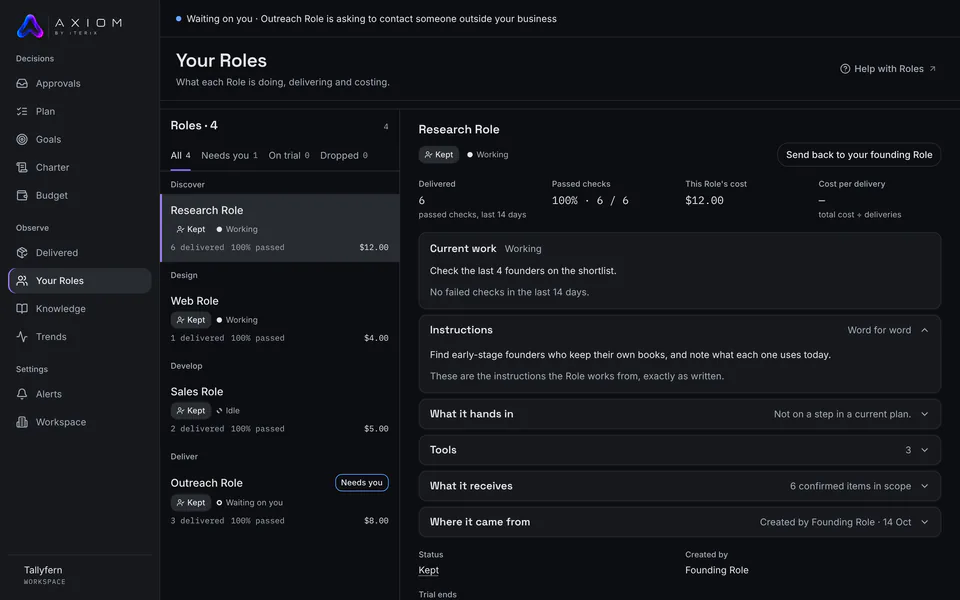
Every new Role starts on trial. When its first work passes the check, Axiom keeps it; if the work can't be made to pass, Axiom drops it. Your Roles shows which, and why.
After its trial, compare each Role's checked work with what it costs. To change or retire one, send it back to your founding Role with a reason. It answers with a plan, and the change happens when you approve it.
Sending a Role back doesn't stop it. It keeps working until the new plan takes effect.
Each goal shows its progress beside what it has spent. A goal counted from delivered work moves on its own. A goal you measure yourself moves when you record where it stands.
When a goal reaches its target, its plan stops: open work is cancelled and queued work doesn't run. You choose the next goal.
A goal's budget caps the work committed to it, not every cost. Planning is charged as it happens, so a goal's spend can pass its budget.